On the Ground: Our Canon EOS R8, RF16mm F2.8 STM and DJI RS 4 Mini Kit
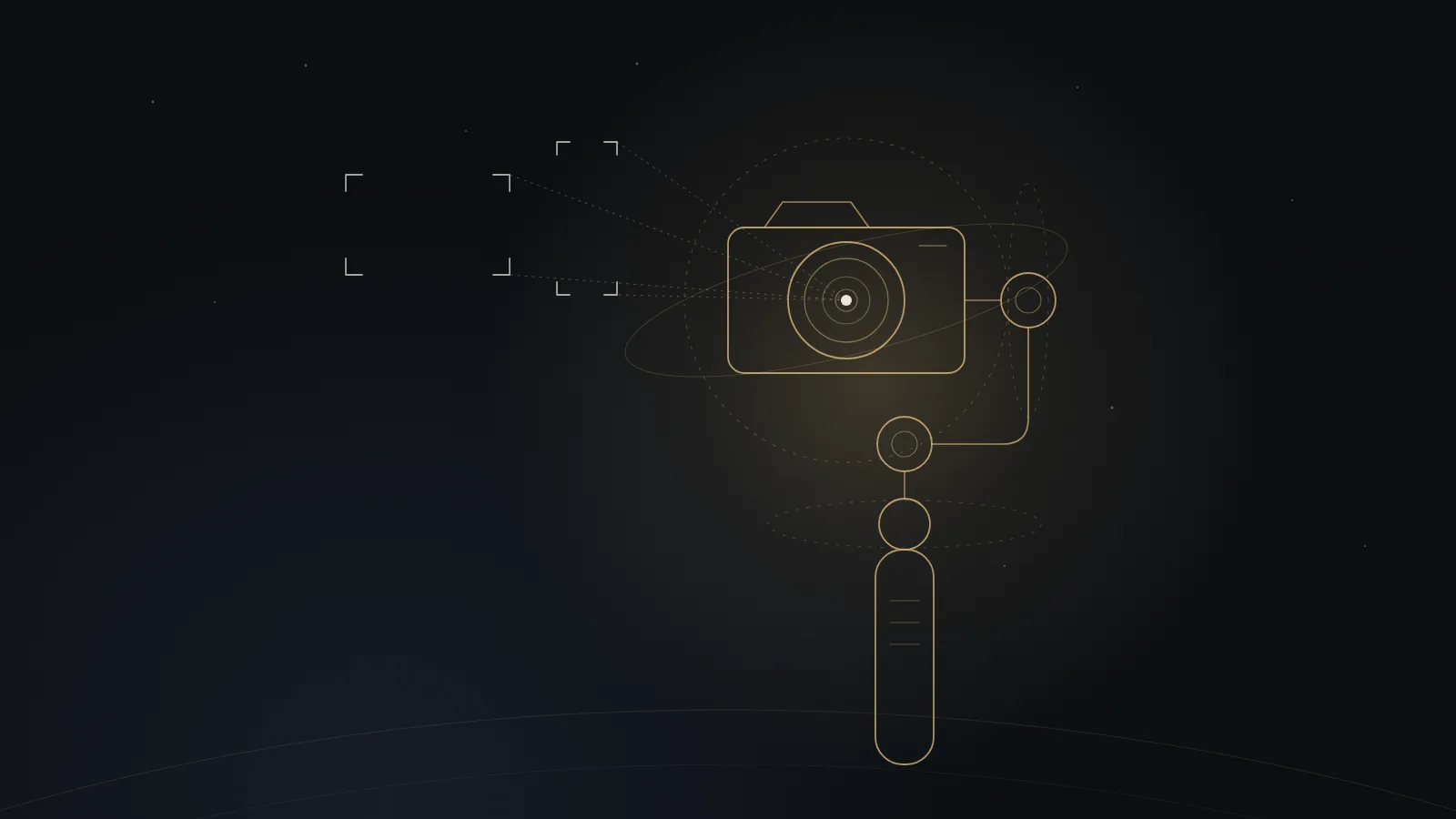
Our drones tell the big story: the property, the venue, the whole site at once. But some of the best moments in a film happen at eye level. There's the front door opening, the first look, the toast, the crew walking a slab. For those, Landon has added a ground camera kit to the Stoop 360 case: a Canon EOS R8 full-frame mirrorless camera, the ultra-wide Canon RF16mm F2.8 STM lens and the DJI RS 4 Mini gimbal stabilizer.
Here's what each piece does, what Canon's and DJI's own specifications say, and how we use them alongside our DJI Avata 360 and Mini 5 Pro. Where the makers don't publish a number, we leave it out.
Canon EOS R8: full-frame image quality in a compact body
The EOS R8 is the heart of the kit. Canon calls it its lightest full-frame EOS camera, at about 414 g for the body alone, with a 24.2-megapixel full-frame CMOS sensor and the DIGIC X processor. Canon says the full-frame sensor delivers low noise at high ISO and a wide dynamic range, which is exactly what indoor venues, evening receptions and dim interiors ask for.
How we use it
- Cinematic 4K with room to grade. The R8 records uncropped 4K at up to 60 fps, oversampled from 6K. On the ground, Landon films log or HDR footage with the R8, in Canon Log 3 or HDR PQ at 10-bit.
- Slow motion for the moments that matter. Full HD at up to 180 fps (without audio, per Canon) turns a ring exchange, a confetti toss or a sparkler exit into a slow, graceful beat.
- Long, uninterrupted takes. Canon rates the R8 for up to 2 hours of continuous 4K or Full HD recording at 29.97 fps, so ceremonies, speeches and presentations don't stop mid-sentence.
- Sharp focus on people who move. Dual Pixel CMOS AF II covers up to about 100% × 100% of the frame with up to 1,053 AF zones, and detects heads, faces and eyes, so a bride walking the aisle or a speaker crossing a stage stays sharp.
- Clean sound. The R8 has a 3.5 mm microphone input and a headphone jack. Landon is trained in sound engineering and monitors the audio on the indoor and outdoor real estate videos he films with the R8. Audio isn't monitored during drone flights.
Canon EOS R8 specifications
| Specification | Canon EOS R8 |
|---|---|
| Sensor | Full-frame CMOS, approx. 24.2 MP effective |
| Processor | DIGIC X |
| Autofocus | Dual Pixel CMOS AF II, up to 1,053 zones, head, face and eye detection |
| 4K video | Uncropped 4K UHD up to 59.94 fps, oversampled from 6K |
| High frame rate | Full HD up to 179.82 fps (no audio) |
| Log and HDR | Canon Log 3 and HDR PQ, 10-bit 4:2:2 |
| Continuous recording | Up to 2 hours (4K UHD or Full HD at 29.97 fps) |
| ISO range | 100–102,400 (expandable to 50–204,800) |
| Screen and viewfinder | 3.0-inch vari-angle touchscreen; 0.39-inch 2.36-million-dot OLED EVF |
| Audio | 3.5 mm mic input, 3.5 mm headphone output |
| Weight | Approx. 414 g body only; 461 g with battery and card |
Canon RF16mm F2.8 STM: room to breathe
A 16 mm lens on a full-frame camera sees a lot of the world. Canon lists a diagonal angle of view of about 108 degrees. It's Canon's first ultra-wide fixed-focal-length RF lens, and at about 165 g it's light enough to ride on a small gimbal all day.
How we use it
- Interiors that feel spacious. For real estate, the wide view shows a living room, kitchen or primary suite in one smooth move, so the walkthrough continues the story our aerial listing photos start.
- Low light without a flash. The bright f/2.8 aperture helps in candlelit receptions and twilight interiors.
- Close and dramatic. Canon lists a minimum focusing distance of 0.13 m (about 5.1 inches) and 0.26x maximum magnification, so we can get right up to rings, invitations, place settings or a detail on a build.
- Quiet autofocus on video. Canon says its gear-type STM stepping motor gives smooth, quiet continuous autofocus while recording.
Canon RF16mm F2.8 STM specifications
| Specification | Canon RF16mm F2.8 STM |
|---|---|
| Focal length | 16 mm |
| Aperture | f/2.8 to f/22, 7 blades |
| Angle of view | Approx. 108° diagonal, 98° horizontal |
| Construction | 9 elements in 7 groups, with an aspherical element |
| Minimum focus | 0.13 m (5.1 in.); max. magnification 0.26x |
| Autofocus | STM stepping motor |
| Filter size | 43 mm |
| Weight | Approx. 165 g |
DJI RS 4 Mini: smooth motion, on the ground
The DJI RS 4 Mini is a compact three-axis gimbal stabilizer that holds the camera steady while we move. We use the Combo version, which DJI ships with the RS Intelligent Tracking Module, a briefcase handle and a tripod.
How we use it
- Fly-through feel at ground level. Smooth walking shots through a home or venue echo the motion of our FPV fly-throughs, so cutting from the air to the front door feels seamless.
- Subject tracking. DJI says the RS Intelligent Tracking Module keeps a person in a consistent position in the frame, over a tracking distance of 0.5 to 10 m, and responds to gesture controls. It's ideal for orbit shots around a couple or a walk-and-talk with a builder.
- Low angles. The briefcase handle makes it easy to carry the camera close to the ground for sweeping low shots of a driveway, an aisle or a dance floor.
- Vertical for social. DJI says the RS 4 Mini switches from horizontal to native vertical shooting in about 10 seconds, so we can capture true 9:16 reels instead of cropping.
- Ready in a second. DJI's automated axis locks mean the gimbal unlocks and powers up fast, which helps when a moment happens without warning.
DJI RS 4 Mini specifications
| Specification | DJI RS 4 Mini |
|---|---|
| Tested payload | 0.4–2 kg (0.88–4.4 lb) |
| Axis locks | Automated (2nd generation) |
| Mechanical range | Pan 360° continuous; tilt −110° to +210°; roll −95° to +235° |
| Max controlled rotation | 360°/s on each axis |
| Vertical shooting | Native vertical, supported |
| Battery | 3,100 mAh; up to 13 hours (stationary, balanced, per DJI); approx. 1 hr 50 min charge |
| Tracking module (Combo) | 0.5–10 m tracking distance; works above 20 lux; gesture control |
| Gimbal weight | Approx. 890 g with quick-release plate |
How the ground kit pairs with our drones
The best films move between scales: the drone shows where you are, and the ground camera shows how it feels to be there. With both in one shoot, every service gets more than an aerial clip:
- Real estate: an aerial reveal of the home and neighborhood, then a stabilized ultra-wide walkthrough inside. For stills, our guide to exposure blending shows how bright windows and shaded rooms are balanced in one photo.
- Weddings: sweeping venue aerials, plus ground-level vows, details and slow-motion moments.
- Events: crowd-wide aerials from above, and tracked, steady coverage of speakers, performers and guests on the ground.
- Construction: progress aerials of the whole site, plus ground-level detail of the work and on-camera updates from the team.
Every film, aerial or ground, remains the work of Stoop 360 and Landon Hoemke.
We film across Dallas, Fort Worth, Austin and the surrounding cities. Explore our services, or request a shoot and Landon will plan the ground and aerial coverage together.
Specifications are from Canon U.S.A.'s official EOS R8 and RF16mm F2.8 STM product pages, Canon Europe's RF16mm F2.8 STM specifications page, and DJI's RS 4 Mini specs and product pages, as published in October 2026. Canon and DJI may update them.
Frequently Asked Questions
Does Stoop 360 film from the ground as well as the air?
Yes. Alongside the DJI Avata 360 and DJI Mini 5 Pro, Landon films ground footage with a Canon EOS R8 full-frame camera, a Canon RF16mm F2.8 STM ultra-wide lens and a DJI RS 4 Mini gimbal stabilizer, so aerial and ground shots can be cut into one film.
Why use a gimbal instead of shooting handheld?
A three-axis gimbal like the DJI RS 4 Mini actively steadies the camera, so walking shots, slow push-ins and orbits look smooth. Its RS Intelligent Tracking Module can also keep a person in a consistent spot in the frame, according to DJI.
Can you deliver vertical video for social media?
Yes. DJI says the RS 4 Mini switches to native vertical shooting, and Canon's EOS R8 records rotation information and shows aspect markers, so we can frame for 9:16 reels as well as widescreen.
Images in this article are illustrative and do not depict specific Stoop 360 projects.
Keep reading
Inside the Stoop 360 Fleet: DJI Avata 360 and DJI Mini 5 Pro
One drone records the whole sphere at once. The other frames a single shot with a 1-inch sensor. How each is used, with the published specs side by side.
Read article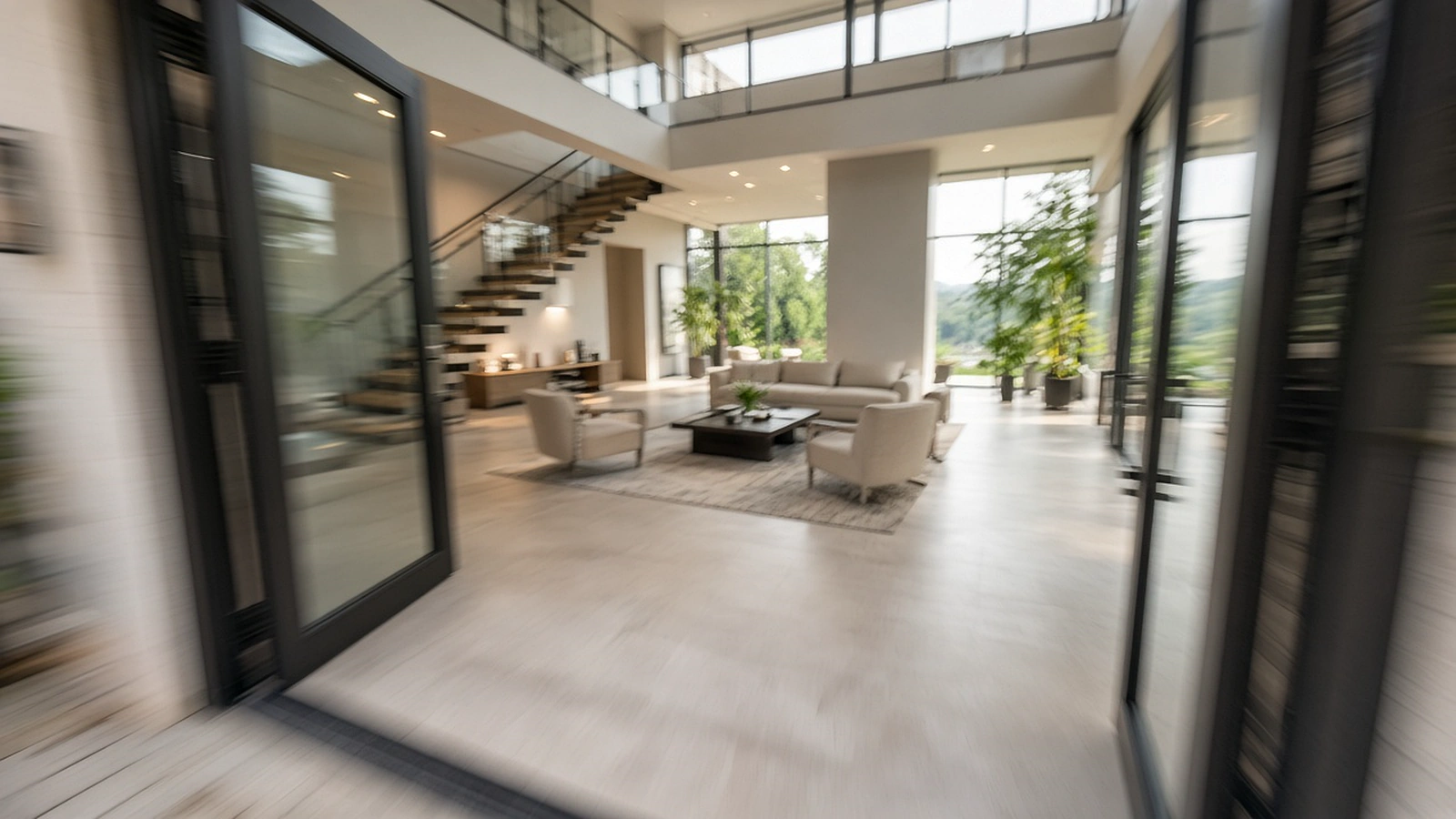
FPV Fly-Through Videos: The One-Take Tour Everyone Is Talking About
Through the front door, down the hall, out over the pool and up into the sky, in one continuous shot. How FPV fly-throughs are planned and when they're worth it.
Read article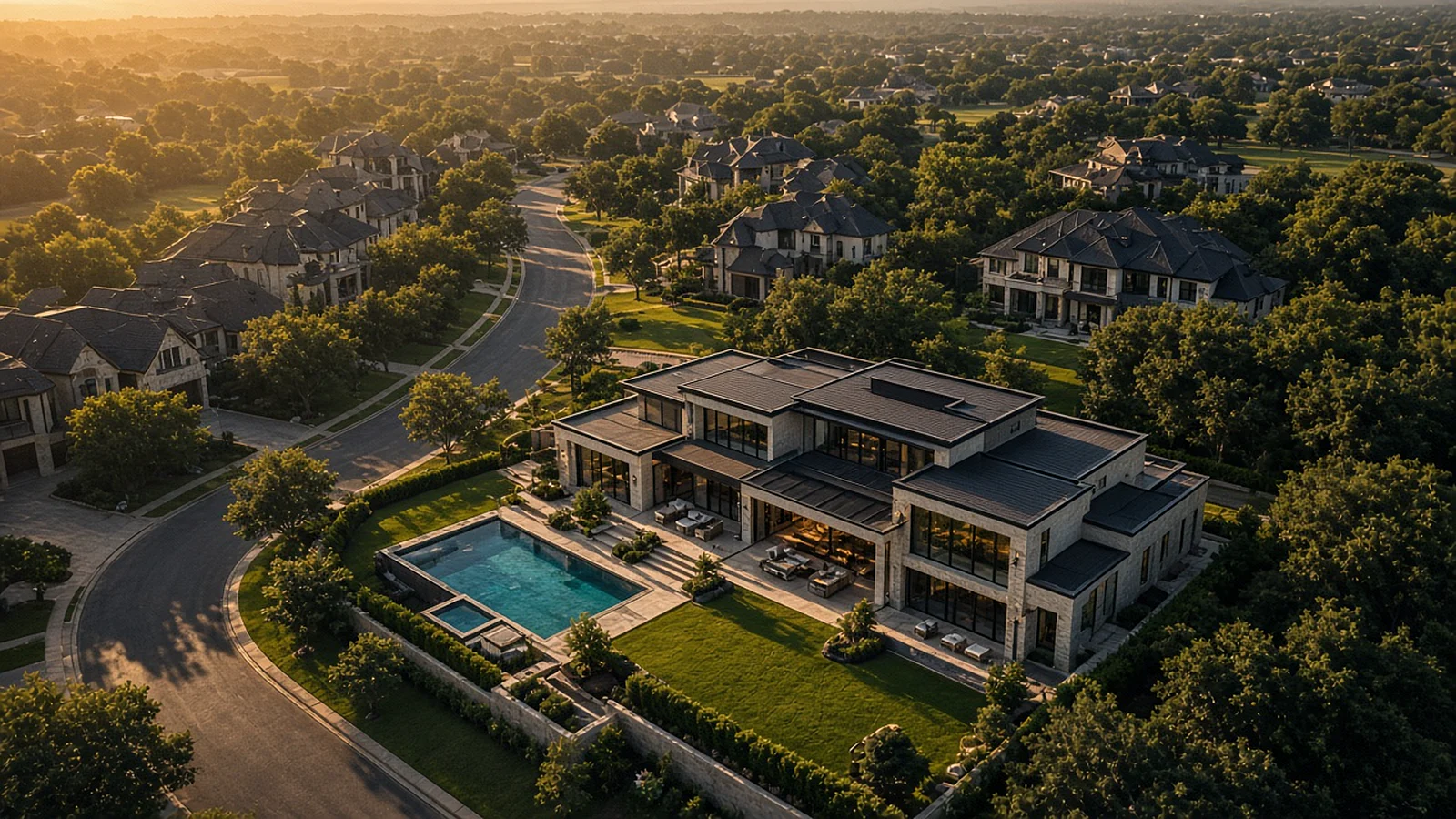
Drone Real Estate Photography in DFW and Austin: How Aerial Images Help a Listing Stand Out
Lot lines, views, the pool, the drive to the lake. Here is how aerial photos tell the part of a listing that ground photos can't.
Read article